How AI Search Is Changing SEO in 2026 (And the Practical Checklist to Keep Up)
If your rankings haven’t moved but your traffic has quietly dropped over the last few months, you’re not imagining it, and you haven’t done anything wrong. This is happening to well-optimized sites across almost every industry right now, and there’s a specific, traceable reason for it: how AI search is changing SEO in 2026 has less to do with your rankings and more to do with what’s happening above them on the results page.
I’ve been working in SEO for over 15 years long enough to have lived through the Panda update, the mobile-first shift, and three separate “SEO is dead” panics that turned out to be nothing. This one is different. Not because SEO is actually dying, but because the job itself has quietly split into two disciplines, and most businesses are still only doing one of them.
Let’s walk through exactly how AI search is changing SEO in 2026, how to check whether it’s affecting your site, what the data actually says, and what to do about it without guesswork.
How AI Search Is Changing SEO in 2026: What Actually Changed (and What Didn’t)
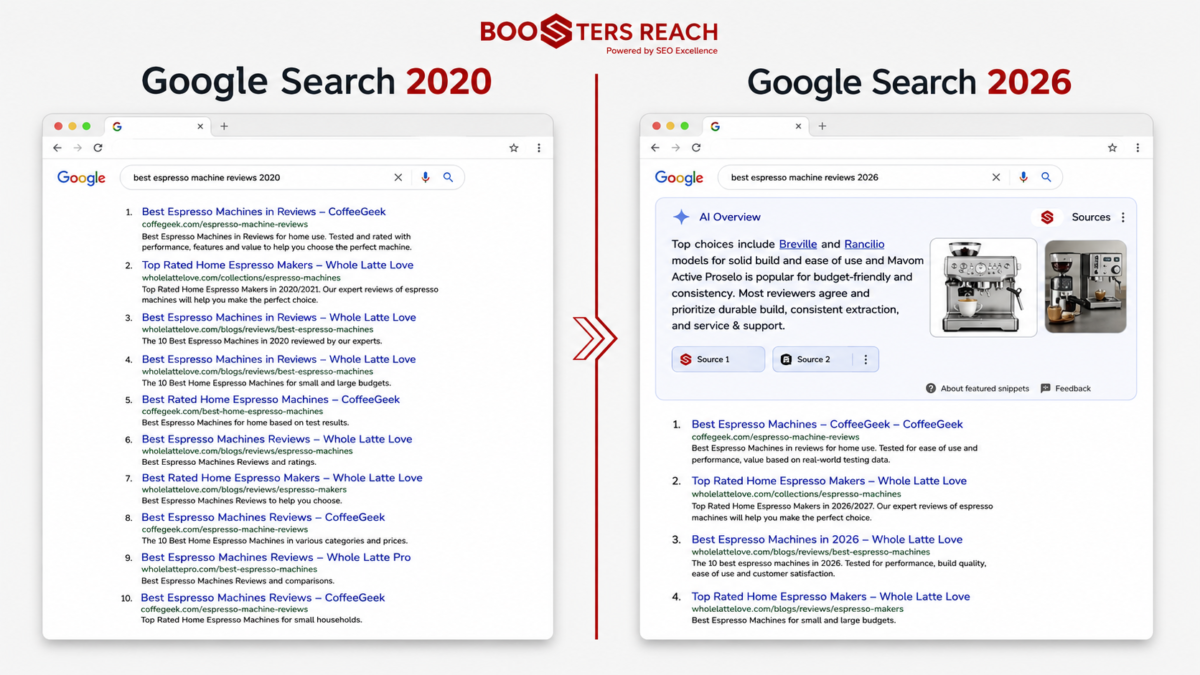
Here’s the part most SEO content gets slightly wrong: search results didn’t shrink, and organic listings didn’t disappear. What changed is what sits above them.
Industry tracking through 2026 shows AI-generated overviews now appear for roughly half to two-thirds of all search queries, a sharp rise from the 25–30% range when the feature first rolled out widely a couple of years ago. In information-heavy categories ealth, finance, how-to content, education that number climbs even higher, in some cases reaching 70% or more of purely informational searches.
The pattern shows up consistently in site audits: rankings hold steady, impressions in Search Console keep climbing, and clicks still fall. That combination is the fingerprint of AI Overviews. The answer is being delivered on the results page itself, before the visitor ever reaches your site.
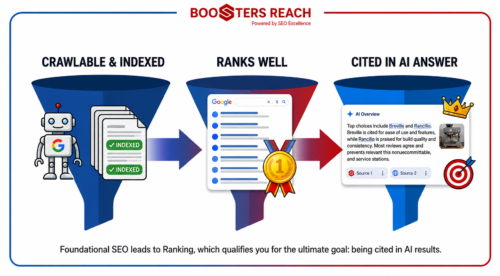
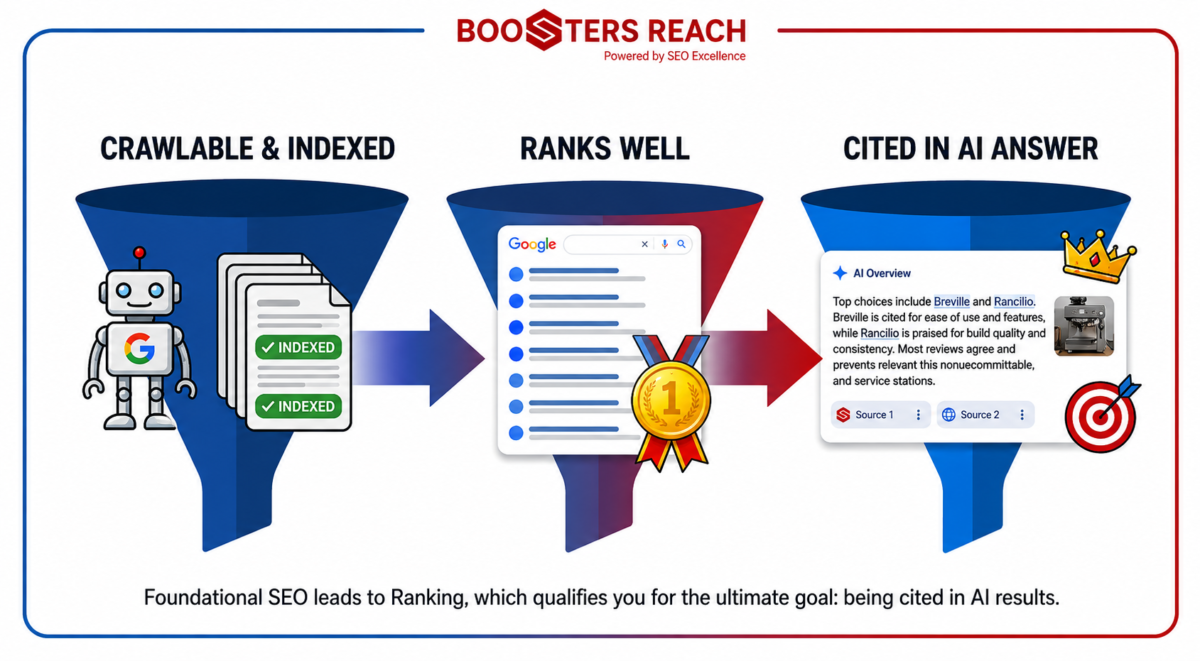
This doesn’t mean SEO stopped working. It means ranking #1 is no longer the finish line it’s the qualifying round. The finish line now is whether the AI system actually pulls your page into its answer and names you as the source.
It’s also worth being honest about what hasn’t changed, because a lot of 2026 content overstates the disruption for clicks. The underlying mechanics of search are the same as they’ve always been: crawl, index, rank, retrieve. Generative engines don’t invent answers out of nowhere they still pull from crawlable, well-structured, authoritative pages. If your site isn’t indexable or trustworthy, no amount of “GEO optimisation” fixes that. GEO is a layer on top of solid SEO, not a replacement for it.
Traditional SEO vs. GEO vs. AEO Where Each One Actually Applies
A lot of the confusion online comes from treating these as competing strategies. They’re not. They solve different parts of the search journey, and a mature 2026 strategy runs all three at once.
| Traditional SEO | GEO (Generative Engine Optimization) | AEO (Answer Engine Optimization) | |
| Goal | Rank in the blue links | Get cited inside AI-generated summaries | Get pulled into direct answer boxes / voice results |
| Best for | Transactional & commercial queries (“buy,” “best,” “near me”) | Informational & research queries (“how does,” “why,” “what is”) | Quick factual questions |
| Key signal | Backlinks, on-page optimization, page speed | Original data, clear structure, named authorship | Concise, front-loaded answers |
| Still matters in 2026? | Yes people who click still convert | Increasingly critical | Yes, especially for FAQ-style content |
The practical takeaway: if you sell something, don’t abandon traditional SEO people who are ready to buy still click through, compare prices, and read reviews before purchasing. Transactional and comparative search behavior has held up far better than informational search, because people don’t trust an AI summary to make a purchase decision for them the same way they’ll trust it to explain a concept.
If you publish informational or educational content, though, GEO and AEO now matter as much as your keyword rankings sometimes more. A page that ranks #3 but gets cited in the AI Overview can realistically get more brand exposure than a page ranking #1 that gets ignored by the generative summary entirely.
The GEO Audit Checklist Check Your Own Site in 20 Minutes
This is the part most articles on this topic skip entirely. Everyone agrees GEO matters; almost nobody tells you how to actually check where you stand. Here’s the exact process I run during client audits.
Step 1: Read your own first two sentences. Open your top 5 traffic-driving pages. Does the second sentence of the article directly answer the core question, in plain language, without needing to scroll? AI systems tend to pull from content that front-loads the answer rather than building up to it with a long introduction, a personal story, or a “in this article we’ll cover” preamble. If your article makes the reader wait three paragraphs to get the actual answer, an AI summarizer will simply skip past you to a competitor who didn’t.
Step 2: Check your structured data. Look for FAQPage, Article, and Author schema on your key pages. If you’re not sure whether it’s implemented correctly, Google’s Rich Results Test will tell you in under a minute. Structured data doesn’t guarantee a citation, but its steady growth across the web strongly tracks with AI search adoption. It’s one of the clearest, lowest-effort signals you can send. Think of schema as translation: it tells a machine explicitly what a human reader infers naturally.
Step 3: Verify your author signals. Does the article have a named author with a real bio and visible credentials? Anonymous or generic “Admin” bylines are one of the most common reasons well-written content still gets skipped in favor of a competitor with a named expert attached. E-E-A-T experience, expertise, authority, trust isn’t a checkbox anymore; it’s an actual filtering mechanism generative engines increasingly rely on to decide which sources are safe to summarize.
Step 4: Read your Search Console data the right way. Pull up your Performance report and compare impressions to clicks over the last 6 months, filtered to informational queries. Rising impressions paired with a falling click-through rate is the clearest first-party evidence that AI Overviews are absorbing your traffic on those specific queries. This is your own data not a stat from an industry report so treat it as ground truth for your site specifically. Segment by query type if you can: you’ll likely see this pattern concentrated heavily in “what is,” “how to,” and “why does” queries, and largely absent from branded or transactional ones.
Step 5: Manually test yourself. Type your target query into Google, ChatGPT, and Perplexity, one at a time. Read the generated answer and check whether your brand or page is named as a source. Do this for your 10 most important topics. It’s manual and unglamorous, but it’s the single most accurate way to know where you actually stand today no tool subscription required.
How to Measure “Am I Being Cited?” Without Buying a Tool
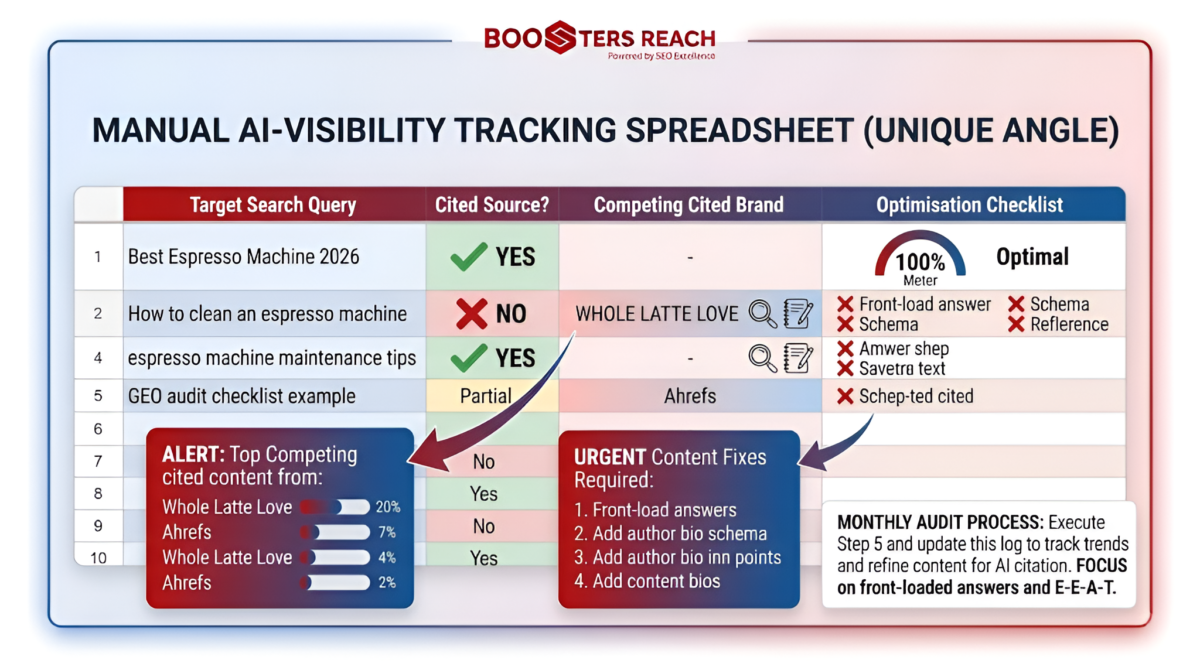
Paid AI-visibility trackers exist and can help at scale, but you don’t need one to start. The Step 5 manual method above, repeated monthly for your priority topics in a simple spreadsheet, gives you a trend line over time: cited, not cited, or partially cited with a competitor also named.
For a small business or solo marketer, that spreadsheet is more actionable than a dashboard you don’t have time to interpret anyway. Track three columns at minimum: the query, whether you were cited (yes/no), and which competitor was cited instead if you weren’t. After a month or two, a pattern usually emerges often it’s the same two or three competitors showing up repeatedly, which tells you exactly who to study and what they’re doing differently in their content structure.
How This Plays Out Differently by Industry
The impact of AI search isn’t uniform, and treating it as one-size-fits-all is where a lot of generic advice falls short.
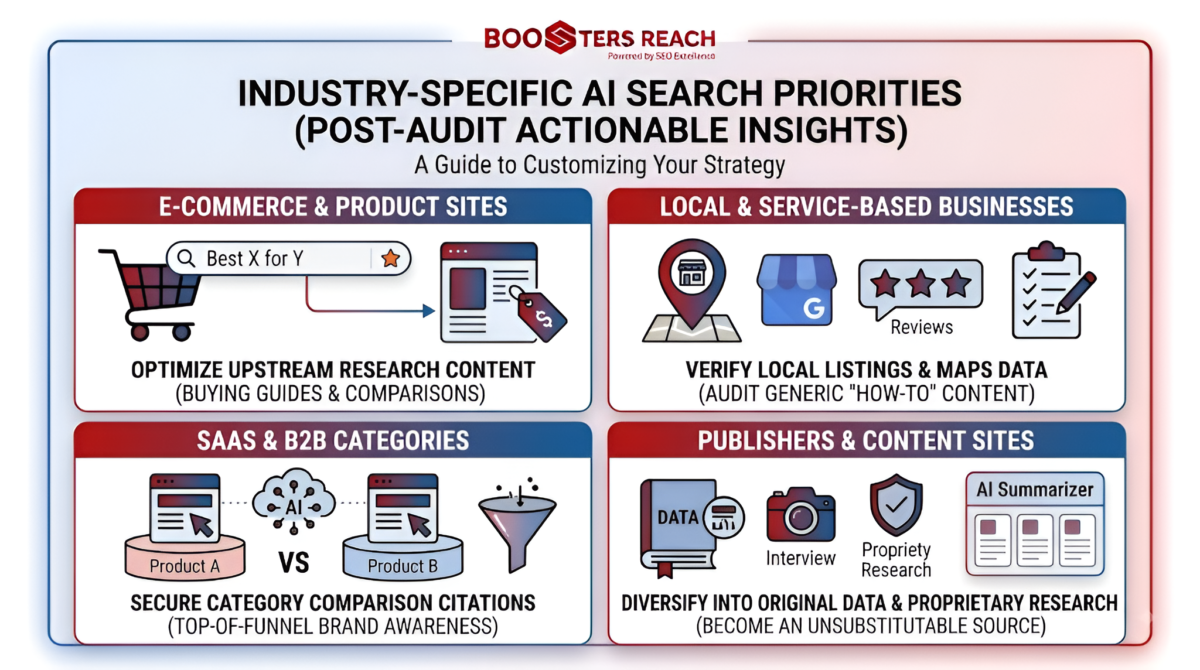
E-commerce and product-based businesses: Product pages, pricing, and reviews remain heavily click-driven. People don’t trust an AI summary to complete a purchase for them. Where GEO matters here is upstream, in the buying-guide and comparison content that feeds the research phase. If your “best X for Y” article gets cited but your product page doesn’t need to be, that’s still a win, because the citation builds brand awareness before the click ever happens.
Local and service-based businesses: Local search behavior has been more resistant to AI Overview disruption so far, since “near me” and location-specific queries still lean heavily on Google Business Profile, maps, and reviews rather than generative summaries. The bigger risk here is generic “how to choose a [service provider]” content getting summarized without your brand being named which is exactly the kind of page the audit checklist above is built to fix.
SaaS and B2B: This is where the shift is most visible. Buyers now research entire category comparisons through AI tools before a human sales conversation ever starts. Being cited as a source in “what is [category]” or “[Product A] vs [Product B]” queries has become a genuine top-of-funnel channel, sitting alongside not replacing content marketing and paid search.
Publishers and content sites: This is the segment absorbing the sharpest click declines, since the entire business model depends on the click itself, not just brand exposure. For this group, diversifying into original data, exclusive interviews, and proprietary research isn’t optional anymore it’s the clearest way to remain a source an AI system can’t easily substitute with a competitor.
Frequently Asked Questions
How is AI changing SEO in 2026?
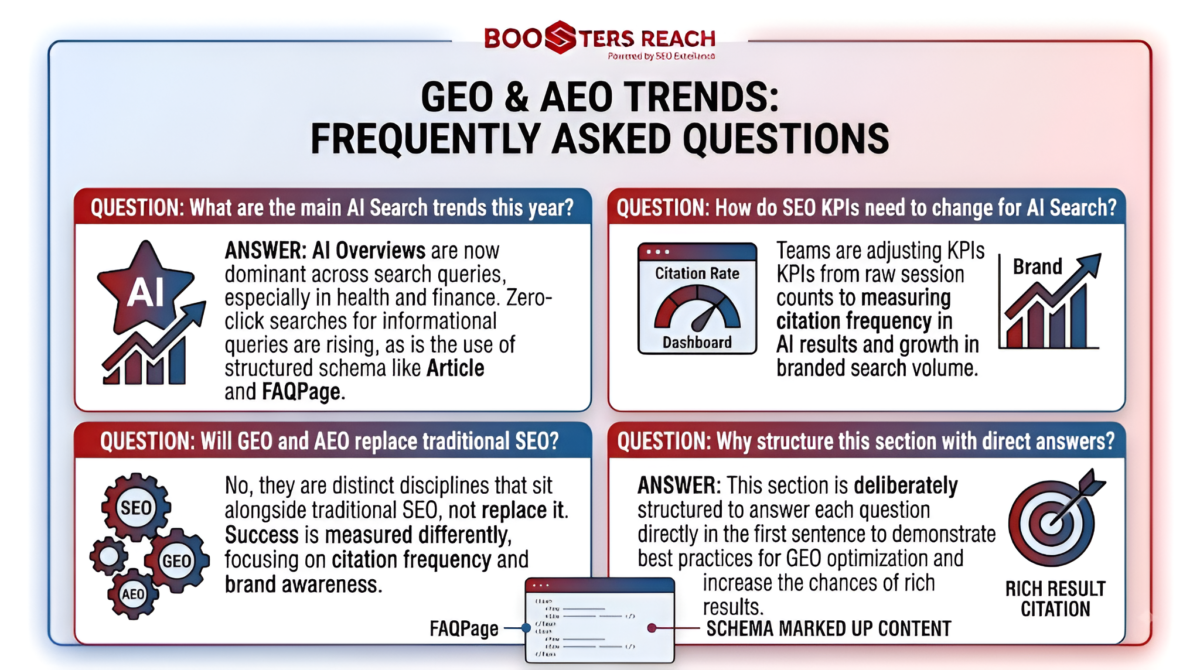
AI search is changing SEO in three concrete ways. First, it’s shifting the primary goal from ranking position to citation being named as a source inside the AI-generated answer now matters as much as where you rank underneath it. Second, it’s compressing click-through rates on informational queries, since a growing share of users get their answer directly on the results page without ever clicking through. Third, it’s raising the bar on content structure and credibility signals clear formatting, original data, and named expert authorship now carry more weight because they’re what makes content easy for a generative engine to extract and trust. None of this replaces the fundamentals of SEO; it adds a new layer on top of them.
Is SEO getting replaced by AI?
No and this is one of the more common misreadings of what’s happening. Generative engines don’t generate answers from nothing; they still depend on a retrieval layer of crawlable, indexed, well-structured web pages to source their summaries from. That retrieval layer is exactly what SEO has always built: crawlability, site speed, internal linking, topical authority, and technical health. AI search hasn’t removed the need for these fundamentals it’s made them a prerequisite for a new, additional goal (citation) rather than the final goal itself. What’s being replaced isn’t SEO; it’s the assumption that a top ranking alone guarantees traffic.
Is SEO dead or evolving in 2026?
Evolving, not dead and the data backs this up more than the panic headlines suggest. Sites that maintain strong technical SEO, structured data, and credible authorship are still generating significant organic traffic and, increasingly, AI citations on top of it. What’s actually “dying” is a narrower version of SEO: the practice of writing content purely to target a keyword phrase without building genuine topical depth or answering the question clearly. That approach was already losing effectiveness before AI Overviews existed. AI search has simply accelerated the shift toward genuinely useful, well-structured, expert-backed content which is a higher bar, not an extinction event.
What are the AI search trends in 2026?
The clearest trends this year are: AI Overviews appearing on a majority of search queries (with informational categories like health and finance seeing the highest coverage), a measurable rise in zero-click search behavior for “what is” and “how to” style questions, growing adoption of FAQPage and Article schema across the web as sites adapt, and the emergence of GEO (Generative Engine Optimization) and AEO (Answer Engine Optimization) as distinct disciplines sitting alongside traditional SEO rather than replacing it. There’s also a growing emphasis on measuring success through citation frequency and branded search growth, not just raw organic session counts, as marketing teams adjust their KPIs to match how visibility actually happens now.
Three Things to Do Today
You don’t need a six-month overhaul to start moving. In order of effort-to-impact:
-
- Rewrite your top 5 pages’ opening two sentences so they answer the core question immediately, before any scene-setting.
-
- Add a real author bio with credentials to your best-performing informational content.
-
- Run the Step 5 manual test on your 10 most important queries this week, and write down what you find. You can’t fix what you haven’t measured.
If you have more time, extend this to your next 15–20 pages, and start tracking your citation spreadsheet monthly instead of one-off. Consistency in measurement is what turns this from a one-time audit into an actual ongoing strategy.
SEO isn’t dead. It’s doing exactly what it’s always done evolving faster than the conversation around it. The businesses that struggle in 2026 aren’t the ones with weak rankings; they’re the ones still measuring success by rankings alone. Add citation visibility to what you track, and the “traffic dropped for no reason” feeling stops being a mystery and starts being a checklist.
Need help auditing your website for AI Overviews? Let Boosters Reach run a full GEO & Entity Audit for your brand.
Sources & Data Note:
Data points and industry benchmarks referenced in this article are derived from 2026 published studies and market analyses by Search Engine Land, Adobe Business Blog, eSEOspace, and ZoneTechify. These figures serve as directional estimates to highlight broad search shifts. Always verify impact and zero-click trends against your own Google Search Console data.